
Everything to know
about RAFA Motors.
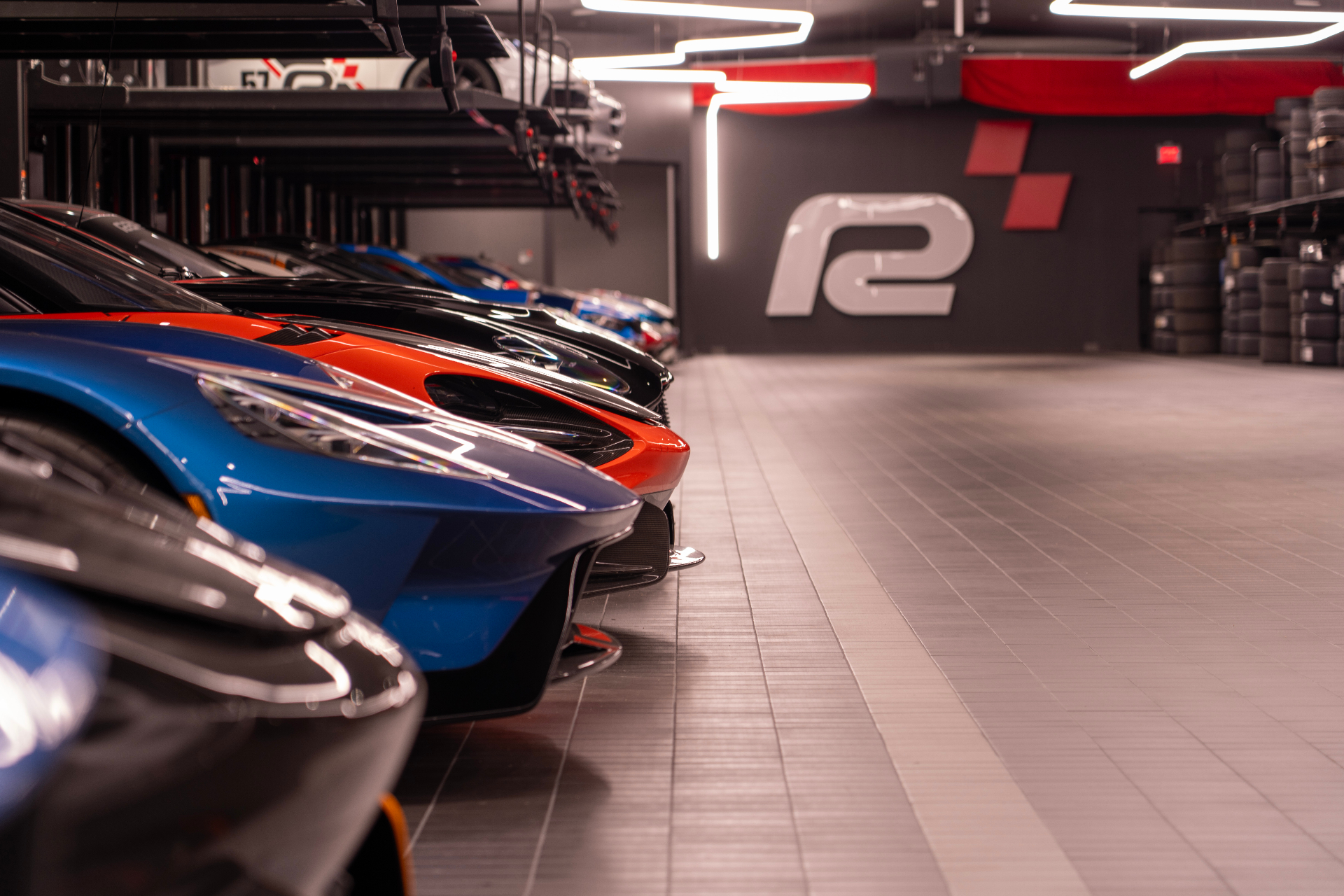
A deeper look at the shop — consignment, climate storage, race-car prep, PPF, and how we think about ownership of cars that matter.
Consignment & Sales
We start with a walk-through and an honest market read — what comparable cars are trading at across duPont Registry, Bring a Trailer, PCarmarket, and private brokers. If we agree on a reserve range, the car comes to our facility for a fresh detail, mechanical once-over, and a full studio-style photo set (typically 80–120 images plus video).
We write the listing copy, publish on the channels that fit the car, and field every inquiry. You see qualified buyers only. We handle negotiation, deposits, title work, escrow, and transport coordination. You sign once at the end.
We negotiate a flat commission or a 5% fee, agreed in writing before the car arrives. There are no surprise prep fees — detailing, photography, and listing costs are bundled. If the car needs mechanical work or PPF before it goes live, we quote that separately and you approve it first. No work happens without sign-off.
Correctly priced, correctly presented exotics in our segment usually move in 30–75 days. Cars priced above the market sit — and a stale listing hurts resale. We tell you the truth on day one rather than burn months chasing a number the market won't pay.
Depends on the car. A 2024 McLaren GT goes one place; a sorted air-cooled 911 goes somewhere very different. We use duPont Registry, Bring a Trailer, PCarmarket, Collecting Cars, our private buyer network, and selective off-market placement. The goal is the right buyer, not the loudest listing.
Yes — we'll quote a cash offer if you need speed. Cash offers are always below consignment-likely net, because we're absorbing market risk and capital. We'll show you both numbers and let you decide.
Storage & Long-Term Care
For us: 65–72°F and 45–55% relative humidity, year-round, monitored 24/7. Humidity is the part most facilities skip — it's what cracks dashboards, hazes headlights, and turns brake rotors into rust the first cold morning. Temperature alone isn't enough.
Battery tender on a smart charger, tire pressure check and rotation against flat-spotting, monthly start-and-warm cycle when appropriate, exterior dust-off, and a walk-around inspection with photos sent to you. Annual items — fluid checks, tire dating, belt inspection — are flagged before they become problems.
No — and this is the most common way owners damage stored cars. A two-minute idle in a cold garage pushes condensation into the oil and exhaust, washes cylinder walls with fuel, and never gets the catalysts hot enough to burn it off.
If a car can't be driven 20+ minutes to full operating temp, it's better off on a tender, untouched, until you can actually drive it.
Full tank with a quality stabilizer added the day before the last drive — full reduces the air volume that creates condensation inside the tank, and ethanol-blend pump gas separates within ~90 days without treatment. For storage beyond six months we recommend ethanol-free or race fuel where the car allows it.
Inflate 5–8 PSI above spec to resist flat-spotting, rotate the car forward and back a quarter turn monthly, and replace tires by date code regardless of tread depth — sidewalls dry out in 6–8 years even in perfect conditions. Tire failure on a stored car is almost always a date-code issue, not tread.
Yes. Concierge pickup and drop-off is part of the program — your home, the airport, the track, wherever. We'll detail it before delivery and pick it up after.
Race Car vs Road Car Care
Treating brake pads and fluid as an afterthought. Street pads glaze and gas off above 600°F and street DOT 4 boils around 450°F wet. One hard session and you have a long pedal and a scared driver.
Before any track day: high-temp fluid (Motul RBF 660 or similar), endurance-grade pads, and a fresh bleed. Tires and alignment matter, but brakes are what hurt people.
By hours and heat cycles, not miles. Engine oil every 15–20 track hours, brake fluid every event for serious sessions, transmission and diff fluid every 2–3 events, and a full corner-by-corner inspection (hub bearings, ball joints, control arms, fasteners) after every weekend.
A dedicated track car eats consumables 10–20x faster than the same chassis on the street.
Road cars are maintained on a calendar to prevent failure between services. Race cars are maintained on a session log to prevent failure during the next session. Everything is inspected, torqued, and corner-weighted before it runs again. Parts are replaced before they're worn, not after — a $40 wheel stud is cheaper than a wheel leaving the car at 130 mph.
You can. Whether you should depends on your tolerance for tire bills, suspension noise, and a chassis tuned to talk to you at 8/10ths. These cars are happiest above 60% — short cold trips are harder on them than a hot lap. If your daily is mostly five-minute errands, a different garage spot makes the GT car last longer and feel better when you do drive it.
Track-grade brake fluid and pads, fresh tires checked for date code and pressures cold, a full nut-and-bolt inspection, alignment verification, fluid levels topped, factory track/sport mode calibration confirmed, and a transport plan to and from the event so the car isn't already heat-soaked when you grid up.
We do this prep weekly for our Racing Club — happy to walk a first-timer through it before the car leaves the shop.
Buying, Selling & Ownership
Always. New-ish miles don't tell you whether the car was tracked, curbed, parked outside in Florida humidity, or hit and re-painted. A proper PPI is paint depth gauge across every panel, lift inspection, diagnostic scan for stored and cleared codes, compression or leakdown when warranted, and a road test. The $400–$800 it costs has saved clients five-figure surprises more times than we can count.
Most exotics are not investments — they're depreciating assets you enjoy. A small subset (limited-production, no-stories, fully optioned, properly stored) holds or appreciates.
We're honest about which bucket a given car falls into before you buy. If your reason for owning it is the drive, the right car is the one that makes you smile — not the one with the strongest auction comp.
Depends on use. Garage queen seeing 2,000 miles a year: full front (hood, fenders, bumper, mirrors, A-pillars, headlights, rocker leading edges) is plenty. Driver seeing 8,000+ miles, road trips, or any track use: full-body PPF pays for itself in resale and peace of mind.
Either way, install on a fresh, paint-corrected surface — not over swirl marks the film will lock in for years.
They solve different problems. PPF is physical impact protection (rock chips, light scratches, road debris). Ceramic is chemical and hydrophobic protection (water spotting, bug etching, UV, easier washing). Best results on serious cars: PPF on impact zones, ceramic on top of the film and across the rest of the car.
Ask us directly.
If it's about a specific car, a track program, or a storage situation we haven't covered, send the details. We'll answer straight — even if the answer is "that's not us."